


Food Allergy vs Environmental Allergy in Dogs & Cats: How to Tell the Difference
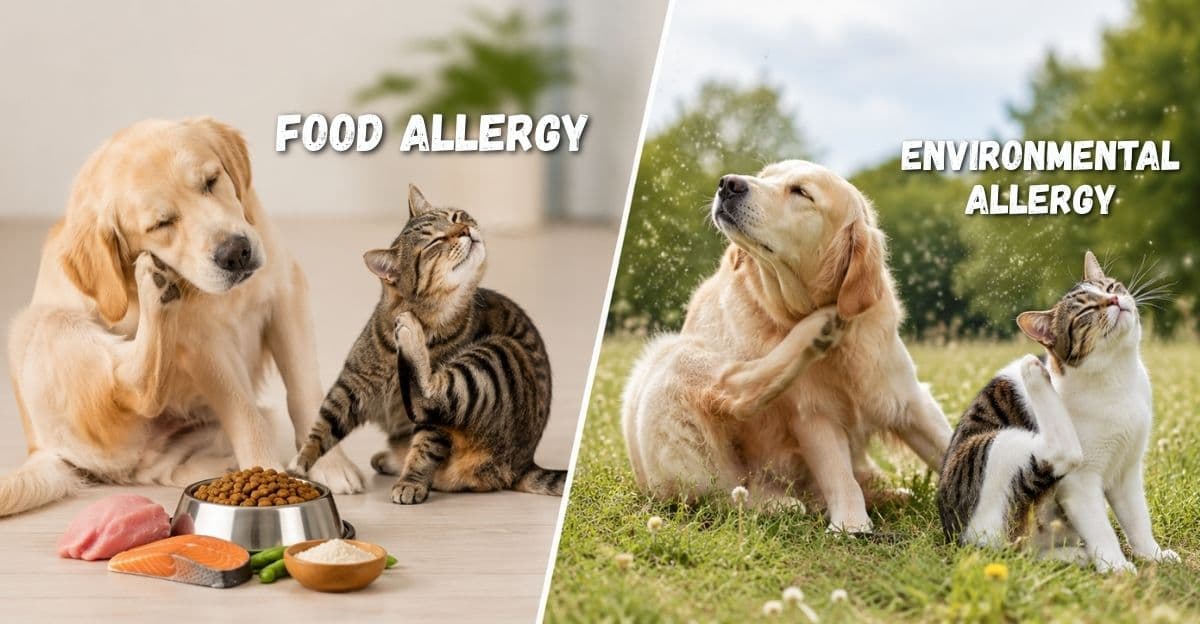
Food Allergy vs Environmental Allergy in Dogs & Cats: How to Tell the Difference
Is your dog or cat constantly scratching, chewing their paws or rubbing their face, but you're not sure what's causing it?
When pets develop itchy skin, many owners assume it's a food allergy. However, environmental allergies are actually more common. Because both conditions can look very similar, it can be difficult to know what's really behind your pet's discomfort.
Understanding the differences can help you work with your veterinarian to find the right solution and get your pet feeling more comfortable.
What Is a Food Allergy?
A food allergy occurs when your pet's immune system reacts to a specific ingredient in their diet. In many cases, the trigger is a protein they've eaten regularly for a long time, such as chicken or beef.
Unlike a sudden upset stomach after eating something unusual, food allergies usually develop gradually and can affect both dogs and cats at any age.
Common signs include:
- Constant scratching throughout the year
- Chewing or licking the paws
- Ear infections that keep coming back
- Red or inflamed skin
- Face rubbing
- Occasionally vomiting or diarrhoea
If your veterinarian suspects a food allergy, they may recommend switching to a Hypoallergenic Dog Food, Hypoallergenic Cat Food or a Novel Protein Diet as part of an elimination diet.
What Is an Environmental Allergy?
Environmental allergies, also known as atopic dermatitis, are caused by substances your pet comes into contact with, rather than what they eat.
Common allergens include:
- Pollen
- Grass
- Dust mites
- Mould
- Household dust
Many pets experience flare-ups during certain seasons, although indoor allergens like dust mites can cause symptoms all year round.
Signs of environmental allergies often include:
- Itchy paws after walks
- Excessive licking of the feet
- Scratching the ears or face
- Red belly or armpits
- Seasonal flare-ups
Because these symptoms are very similar to food allergies, diagnosis often requires ruling out other possible causes first.
Food Allergy vs Environmental Allergy: What's the Difference?
| Food Allergy | Environmental Allergy |
|---|---|
| Triggered by ingredients in food | Triggered by pollen, dust, grass, mould and other environmental allergens |
| Usually occurs all year round | Often seasonal, but can also occur year-round |
| May include digestive issues | Usually affects the skin only |
| Commonly managed with dietary changes | Often managed by reducing allergen exposure and veterinary treatment |
| May improve after an elimination diet | Symptoms may continue unless environmental triggers are controlled |
How Do Vets Find the Cause?
Because food and environmental allergies look so similar, there isn't a simple home test to tell them apart.
Your veterinarian may recommend:
- Ruling out fleas and parasites
- Checking for bacterial or yeast skin infections
- Starting an elimination diet using a Limited Ingredient Food or Novel Protein Diet
- Monitoring symptoms over 8–12 weeks
- Further allergy testing if environmental allergies are suspected
An elimination diet is currently one of the most reliable ways to diagnose a food allergy.
Can Omega-3 Help?
Whether your pet has a food allergy or an environmental allergy, healthy skin is an important part of managing itchiness.
Adding Omega-3 Supplements or Salmon Oil to your pet's diet may help support the skin's natural barrier and overall skin health. While these supplements don't cure allergies, they can be a helpful addition to your pet's daily care routine when used alongside your veterinarian's recommendations.
You can also explore our Skin & Coat Care Collection for nutritional support designed for both cats and dogs.
When Should You See a Vet?
If your pet is scratching every day, losing fur, developing sores or repeatedly getting ear infections, it's important to seek veterinary advice.
The earlier the cause is identified, the sooner your pet can receive the right care and avoid unnecessary discomfort.
Finding the Right Solution Starts with the Right Diagnosis
Food allergies and environmental allergies can cause many of the same symptoms, but they require different management approaches.
Rather than guessing, work with your veterinarian to identify the underlying cause. Whether your pet needs a Hypoallergenic Diet, Novel Protein Diet or long-term allergy management, choosing the right approach can make a significant difference to their comfort and quality of life.
Shop Sensitive Skin & Allergy Care at Petico.sg
Looking for products to support pets with sensitive skin?
Explore Petico's Sensitive Skin & Allergy Care Collection, featuring Hypoallergenic Dog Food, Hypoallergenic Cat Food, Novel Protein Diets, Limited Ingredient Foods, Omega-3 Supplements and Salmon Oil to help support healthy skin and overall wellbeing.